“It was painless to work with her,” said Joe Pytka, who directed the superstar’s famous Canon commercial. “There was a discipline to her.”
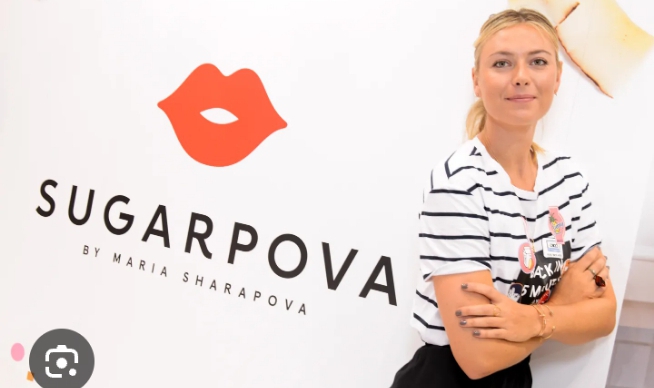
This week, Maria Sharapova, Bob Bryan and Mike Bryan will be inducted into the International Tennis Hall of Fame in Newport, Rhode Island. Look for special features throughout the lead-up.
It’s ironic that someone born in a Communist nation like 2025 International Tennis Hall of Fame inductee Maria Sharapova could best be defined by these two words: all business.
Throughout much of the 20th century, when Russia was known as the Union of Soviet Socialist Republics (USSR), there existed an official cultural doctrine called “Socialist Realism.” Its premise of was that art, literature and other forms of expression would showcase communism in its most idealized way. Its heroes were the men and women of the working class, collectively harnessed in the service of a greater cause. Materialism: no. Austerity: yes.
A Perfect Storm for Russia, Tennis, Capitalism
Fast-forward to the 1990s, shortly after Sharapova’s birth in 1987. The USSR had splintered. Russia’s president, Boris Yeltsin, embraced capitalism. Yeltsin loved tennis, helping to support an atmosphere where a game, previously disdained in the USSR as a ruling-class toy, was granted legitimacy by the nation’s leader as a full-fledged sport.
By the late ‘90s, increasing numbers of Russian tennis players began to hit the pro tennis radar. Among the notable: Anna Kournikova, who in 1997 reached the semifinals of Wimbledon at the age of 16. Kournikova’s looks also generated headlines. “Only the Ball Should Bounce,” read a tagline for one ad she was featured in. But while Kournikova briefly cracked the Top 10 and earned two Grand Slam doubles titles, her failure to win a singles tournament created a credibility gap between expectation and performance.
In 2002, Sports Illustrated writer Jon Wertheim profiled a promising teenager from Tashkent named Simonya Popova. “Fortunately for the WTA,” wrote Wertheim, “Popova has pulchritude and attitude in equal measure. Her midriff-baring outfits, so small they appear to come from Gap Kids, highlight her ample decolletage. She has already agreed to pose for the tour’s annual swimsuit calendar. When she turns pro, an image consultant hired by her agent will travel with her.”
Popova was fictitious, a satire that highlighted the WTA’s challenge of balancing the authenticity of competition with the artifice of marketing. “Women’s Tennis: Athletes or Objects?” was the title of a 1999 article I wrote.