Alex de Minaur Hits Milestone Amid Concerns for His Future
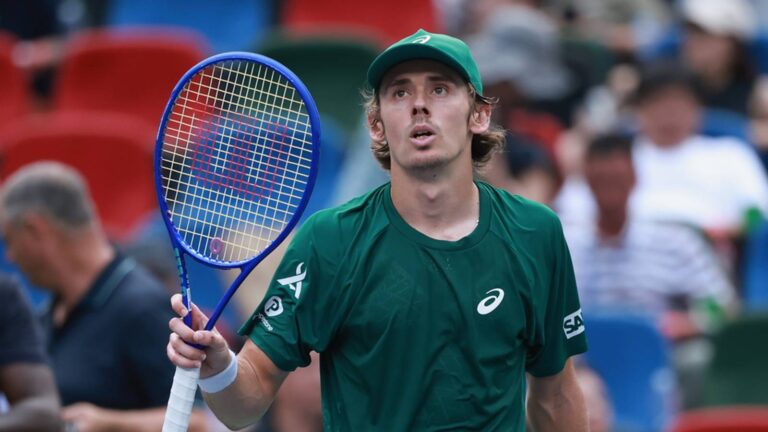
On Monday night in Vienna, Alex de Minaur strode off the court with a fierce forehand and a personal landmark: his 300th career win. The Australian, seeded third at the Erste Bank Open, dispatched local hope Jurij Rodionov 6-4, 6-1 in just 80 minutes—a performance that was as clinical as it was celebratory. Yet, even as the crowd applauded his achievement, a new conversation began swirling around de Minaur’s career: how can he sustain this level for years to come?
Consistency and Physicality: The Double-Edged Sword
De Minaur’s rise has been defined by relentless consistency. He’s racked up 70 matches in 2025 alone, winning 50—a tally second only to Carlos Alcaraz. According to ATP Tour, he also leads the circuit in hard-court wins this season. His speed and stamina have made him a fixture in the ATP’s top eight, and he’s now on the brink of qualifying for the Nitto ATP Finals for a second consecutive year.
But this grind comes at a cost. After missing the UTS event in Hong Kong due to a hip injury, de Minaur’s physical limits have come into sharper focus. Naomi Cavaday, speaking on Sky Sports Tennis, issued a pointed warning: “It’s the sort of game style that’s not really going to cut it at 36 because you take 2% off your speed, and all of a sudden, you’re not the fastest in the world, and it’s not that difficult for your opponent to deal with.”
Her analysis cuts to the heart of de Minaur’s dilemma. His game is built on movement, chasing down every ball, making life miserable for opponents who rely on power. But as he approaches his late twenties, the question looms—can he adapt before his body forces him to?
Vienna Victory: A Snapshot of De Minaur’s Strengths
Against Rodionov, de Minaur’s strengths were on full display. The Austrian wildcard fought valiantly in the first set, even earning two break points in the fifth game. But de Minaur’s tenacity and tactical awareness shone through. He broke serve, then raced ahead in the second set, opening up a 3-0 lead and never looking back. The match ended with a love hold and a forehand winner—classic de Minaur.
“It’s pretty cool. You go through this sport, through your career, and you don’t really get time or many options to really let something sink in,” de Minaur reflected post-match, as quoted by ATP Tour. “This is one of those things that is a pretty cool moment, to get to 300. Obviously, it seems what has been a long career and I’ve enjoyed these 300 wins.”
He’s now the second man born in 1999 or later to reach 300 tour-level victories, trailing only Jannik Sinner, who hit the mark earlier this year. The win sets up a second-round tie with either Camilo Ugo Carabelli or Filip Misolic, and keeps de Minaur in the hunt for a spot at the ATP Finals in Turin.
The Longevity Equation: Fewer Tournaments, Smarter Play?
As de Minaur’s milestone is celebrated, experts urge a change in approach. Cavaday suggests that de Minaur should “cherry pick a bit more” when it comes to tournaments, echoing a trend among players in their thirties. “We’ve seen a lot of players do that now,” she noted, referencing the likes of Rafael Nadal and Novak Djokovic, who have strategically reduced their schedules to extend their careers.
De Minaur’s current schedule is nothing if not ambitious. He is third in matches played this year—only Zverev and Alcaraz have played more. While the competitive fire is admirable, the physical toll is undeniable. The hip injury that sidelined him in Hong Kong serves as a warning: without adaptation, longevity could slip away.
Other players in Vienna, such as Alexander Bublik, are also grappling with the balance between ambition and sustainability. Bublik, who has his sights set on breaking into the ATP top 10, cruised through his own first-round match, but his comments earlier in the week suggest a growing awareness among the tour’s younger stars that career management is as crucial as technical skill.
What Lies Ahead: Can De Minaur Change Course?
For now, de Minaur shows no signs of slowing down. His next challenges in Vienna and likely at the Paris Masters will test both his form and his resilience. The Australian’s journey is emblematic of a larger shift in men’s tennis, where physicality and scheduling are being reexamined in the pursuit of longer, more successful careers.
At his last tournament in Shanghai, de Minaur notched his 50th win of the year—a personal best. Now, with 300 career victories, he’s reached another rarefied milestone. But as the tour calendar grinds on, the question is no longer just about how many matches he can win, but how many more years he can keep winning.
Fans will watch closely as de Minaur faces his next opponents in Vienna, and as he weighs the advice of analysts and coaches. Will he tweak his game, perhaps relying more on craft and less on sheer speed? Will he cut back on tournaments, preserving his energy for the events that matter most?
For now, the applause rings out in Vienna. But as de Minaur himself knows, tennis is a sport where the future can shift with a single decision—or a single injury.
Alex de Minaur’s 300th win is a testament to his tenacity and skill, yet it also signals a crossroads: without thoughtful adaptation in training and scheduling, his trademark speed may become his Achilles’ heel. The true measure of his legacy will be how he responds to this pivotal moment.